| Sign In | Join Free | My benadorassociates.com |
|
Brand Name : Gold
Model Number : WDDS-2C
Place of Origin : China,Chongqing
MOQ : 1
Price : 3000-5000$ 1 set
Payment Terms : L/C,D/A,D/P,T/T,Western Union,MoneyGram
Supply Ability : 1 set per 5 days
Delivery Time : 5-8 working days
Packaging Details : Wooden
Other Name : geophysics / geo resistivity meter
Brand : Gold
Weight : ≤4.2Kg
SP Compensation Range : ±10V
Max Current Sampling Resolution : 0.02μA
Storage Temperature : -20°C~+60C(Environmental)
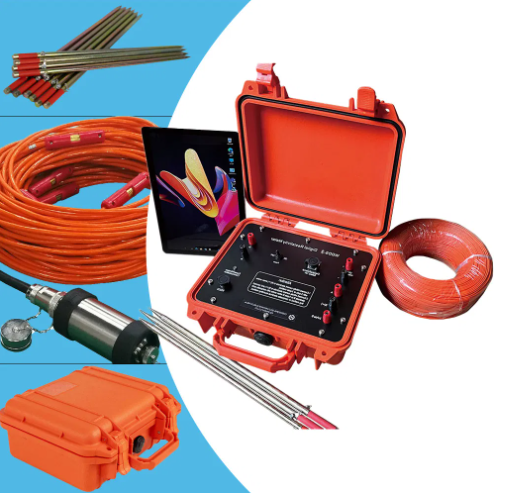
The advancement of geoscience knowledge is propelled by rigorous field observation and experimental validation. The WDDS-3C Digital Resistivity Meter is engineered to function as a complete, field-deployable geophysical laboratory, providing university departments, research institutes, and government science agencies with a versatile platform for teaching, fundamental research, and applied scientific investigation. It successfully bridges the gap between theoretical concepts taught in the classroom and the practical realities of field data acquisition, offering students and researchers alike the opportunity to engage with professional-grade technology that produces publication-quality results. Its design philosophy emphasizes not only performance and accuracy but also educational accessibility and pedagogical value, making it an ideal instrument for cultivating the next generation of geoscientists, hydrogeologists, and environmental engineers.
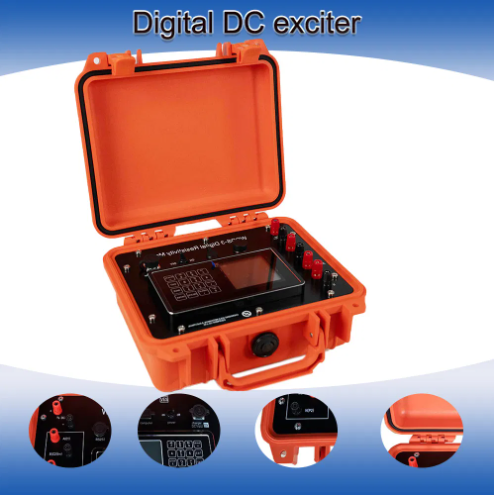
Within an academic curriculum, the WDDS-3C serves as a central tool for experiential learning across a diverse range of disciplines. In geology and earth science programs, it enables students to directly image subsurface structures, map geological contacts, and understand the principles of geophysical inversion and data interpretation. For hydrology and environmental science students, it provides a hands-on method for locating groundwater, mapping saltwater intrusion, and investigating soil-plant-water interactions. In archaeological studies, it offers a non-destructive means to prospect for buried features, bringing a tangible technological dimension to field archaeology. The system's intuitive software interface, coupled with comprehensive teaching resources—including curated laboratory exercises, sample datasets, and instructional videos—empowers educators to seamlessly integrate cutting-edge geophysical methods into their syllabus, enhancing student engagement and learning outcomes.
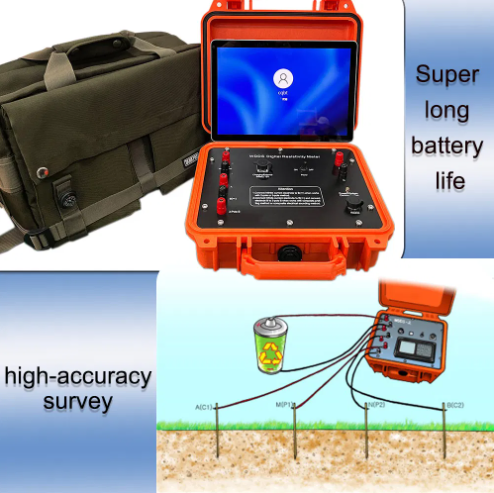
For the research community, the WDDS-3C provides a flexible and powerful platform for hypothesis-driven science. Its high precision and sensitivity make it suitable for monitoring subtle, dynamic processes in the shallow subsurface, such as infiltration from rainfall events, root-zone moisture dynamics, biogeochemical transformations, and thermal regime changes. Researchers can deploy custom electrode arrays tailored to their specific experimental design, and the system's robust data format ensures seamless export to specialized processing and inversion software (e.g., Res2Dinv, BERT, PyGIMLi) for advanced analysis. The ability to conduct long-term, time-lapse studies transforms the instrument from a mere mapping tool into a sensor for observing four-dimensional Earth processes, opening new avenues of inquiry in critical zone science, climate change impacts, and ecosystem dynamics.
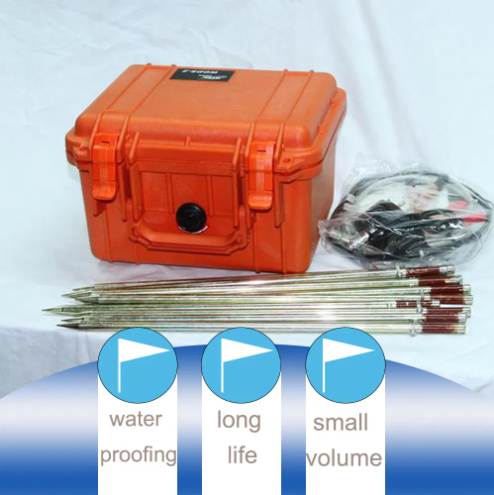
The system is designed with the practical realities of academic life in mind, featuring durability to withstand use by successive cohorts of students and portability for field camps and remote research sites. Its modular design and adherence to open data standards encourage innovation, allowing graduate students and researchers to develop new methodologies, test novel electrode configurations, or even integrate the system with other sensors like seismometers or GPR. This fosters a culture of technical innovation and methodological advancement within academic institutions. Furthermore, the data generated by the WDDS-3C is of sufficient quality and rigor to form the basis for peer-reviewed publications, masters theses, and doctoral dissertations, directly contributing to the scientific reputation and research output of the institution. By investing in this technology, universities are not merely purchasing a piece of equipment; they are investing in a multidisciplinary resource that elevates teaching, enables frontier research, and attracts high-caliber students and faculty.

Technical Specifications for Academic and Research Applications:
| Parameter | Specification |
|---|---|
| Educational Resource Package | Included lab exercises, datasets, and tutorials |
| Data Format for Research | Open, well-documented ASCII & EDI formats |
| Compatibility with Research Software | Export to Res2Dinv, BERT, PyGIMLi, MATLAB |
| Pedagogical Interface Options | Basic (simplified) and Advanced (full features) modes |
| Support for Custom Arrays | Yes, user-definable electrode sequences |
| Time-Lapse Study Support | Dedicated survey setup and repeat measurement tools |
| Suitability for Student Projects | High, due to intuitive operation and robust construction |
| Publication-Quality Data Output | Yes, with professional-grade precision and metadata |
| Operating Temperature Range | -10°C to +50°C |
| Warranty and Support for Institutions | Extended academic warranty and technical support |

|
|
Field-Deployable High Precision Geophysical Resistivity Meter with Educational Resource Package Images |